
Your clients want premium kitchens. The problem is that they're working with 80 square feet instead of 180. As a contractor, builder or designer, you're tasked with delivering style, function and smart storage in spaces where every inch counts — and your reputation rides on getting it right.
Small-space kitchen projects are booming. Urban living, apartment conversions and studio condos continue to dominate the housing market, and the professionals who master small-space design turn this challenge into a competitive advantage.
Ready-to-assemble (RTA) cabinets are your secret weapon. When you choose the right configurations and apply smart space-maximization strategies, you transform cramped kitchens into beautifully functional spaces. Explore seven professional-grade RTA cabinet strategies that solve the most common small-space challenges and help you deliver exceptional results while protecting your margins.
Why Small-Space Projects Require Strategic Planning
Small kitchens present unique challenges that go beyond square footage. Your clients expect full functionality in a fraction of the space, and delivering that result requires strategic planning from day one. The best cabinet strategies for small kitchens address workflow, storage density and visual impact simultaneously.
Strategic planning prevents the usual failures — bottlenecked work triangles, inaccessible storage and cluttered countertops. When you approach projects systematically rather than simply downsizing standard layouts, you exceed expectations and command premium pricing.
Common Small-Space Challenges Professionals Face
Small kitchen constraints create predictable pain points. Understanding these challenges helps you solve them proactively during planning rather than reactively during installation.
Workflow disruption tops the list. Poorly positioned cabinets create collision points where users can't move freely. Limited counter space forces clients to choose between prep area and small appliance storage. The most frustrating small kitchen problems consistently include insufficient storage, limited countertop real estate and difficulty establishing functional work zones. Your job is bridging the gap between your clients' vision of full-sized kitchens and small-space realities through smart cabinet solutions.
The ROI of Smart Cabinet Selection
Cabinet selection directly impacts your bottom line. The right cabinets drive measurable value for clients and protect your margins.
According to Remodeling's 2024 Cost vs. Value Report, a minor kitchen remodel can deliver up to 96% ROI. Smart storage solutions are primary drivers of this value. When you specify cabinets that maximize storage in small spaces, you're directly contributing to resale value and client satisfaction — which translates to better referrals, repeat business and fewer callbacks.
With that in mind, here are seven RTA cabinet strategies to consider for small living spaces.
1. Maximize Vertical Storage With Tall RTA Cabinets
Going vertical is your most powerful move in small-space kitchens. When floor space is limited, ceiling height becomes your most valuable asset. RTA cabinets for small spaces should prioritize height over width whenever layouts allow.

Tall cabinets create high-density storage without consuming floor area, all while making ceilings feel higher and spaces feel larger. For you, taller cabinets demonstrate design sophistication and help justify premium pricing:
- 42-inch wall cabinets: Standard 30-inch uppers waste 18 inches of vertical space in typical 8-foot rooms. Specifying 42-inch wall cabinets extends storage to the ceiling for seasonal items and less-frequently accessed pieces while providing a built-in, custom look that clients love.
- Tall utility cabinets: Floor-to-ceiling pantry cabinets of 84-96 inches transform narrow spaces into high-capacity storage hubs. An 18-inch-wide tall cabinet holds three times the volume of a standard 30-inch base while occupying the same footprint. These units excel at storing food, cleaning supplies and small appliances.
- Installation considerations: Measure at multiple points to account for uneven ceilings. Use crown molding to create a finished appearance that conceals gaps between cabinet tops and ceilings.
2. Optimize Corner Spaces With Smart Cabinet Solutions
Corner cabinets are where you'll find hidden opportunity. Standard corner configurations waste a lot of available cubic footage in dead space. With small-space cabinet solutions that address corners effectively, you can add substantial usable storage.
The key is matching cabinet type to specific layouts and usage patterns:
- Lazy Susan base cabinets: Rotating shelves make corner contents fully accessible with a simple spin. These work best for frequently used items like mixing bowls and pots, especially in L-shaped and U-shaped layouts where both cabinet faces are easily accessible.
- Blind corner configurations: While more economical than Lazy Susans, these require pull-out accessories to make deep interiors fully usable. High-quality pull-out systems can handle weight and daily use.
- Diagonal corner wall cabinets: Diagonal fronts soften corners visually and provide excellent display space, especially with glass-front doors. These work beautifully for showing off stemware or decorative dishes.
- Easy-reach base options: Wide-opening hinged doors provide unobstructed access — ideal for clients with mobility concerns or those prioritizing ease of access over maximum storage density.
3. Implement Pull-Out and Organizational Features
Built-in organization separates your premium projects from basic installations. When you add pull-out features and organizational systems, you create perceived value that justifies higher costs and generates enthusiastic referrals.
Pull-outs solve the fundamental problem of items pushed to the back of deep base cabinets becoming functionally lost. Make every inch truly usable when storage is already at a premium:
- Roll-out trays: Bring entire cabinet interiors forward rather than forcing users to reach into dark corners. Specify heavy-duty glides rated for 75-100 pounds. Two or three roll-out trays can double or triple usable storage capacity.
- Pull-out spice racks: Turn awkward 3-6-inch filler spaces into valuable storage. These slim organizers typically hold 20-40 bottles and pull out completely for easy access.
- Drawer organizers: Factory-integrated organizers for cutlery, utensils and dishes represent a high-value upgrade clients notice immediately. These prevent the jumbled mess that standard drawers create.
- Base filler pull-outs: Use narrow spaces beside ranges and refrigerators to store baking sheets, cutting boards and serving platters. In small kitchens, using every available inch is critical to maximize kitchen storage without expansion.
4. Configure Multifunctional Cabinet Units
Combining multiple functions into a single cabinet unit saves precious floor space while maintaining full kitchen capability. Multifunctional cabinets reduce the total number of units required, freeing up space for circulation and reducing visual clutter.
These approaches work especially well in studio apartments, small condos and galley kitchens:
- Wall or base microwave cabinets: Wall-mounted units free up counter space while keeping appliances at a comfortable height. Base units create cleaner sight lines and free up wall space for additional storage.
- Appliance garages: Conceal toasters, coffee makers and blenders behind tambour or hinged doors. Keep appliances ready to use while eliminating visual clutter.
- Compact pantry cabinets (12-18 inches wide): Compact pantry cabinets provide substantial food storage without full-depth pantry requirements. They're perfect for narrow spaces beside refrigerators or at the end of cabinet runs.
- Combination drawer/door units: Drawers in upper sections with door storage below offer versatility for cookware, bakeware, linens and small appliances. This configuration maximizes storage options within a single footprint.
5. Design for Visual Space Expansion
Physical storage matters, but perceived space is equally important. Cabinet design choices dramatically impact how large or cramped spaces feel, regardless of actual square footage.
These strategies manipulate light, color and sight lines to create the illusion of expanded space:
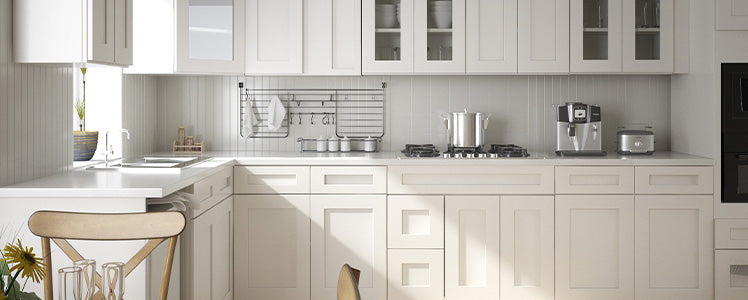
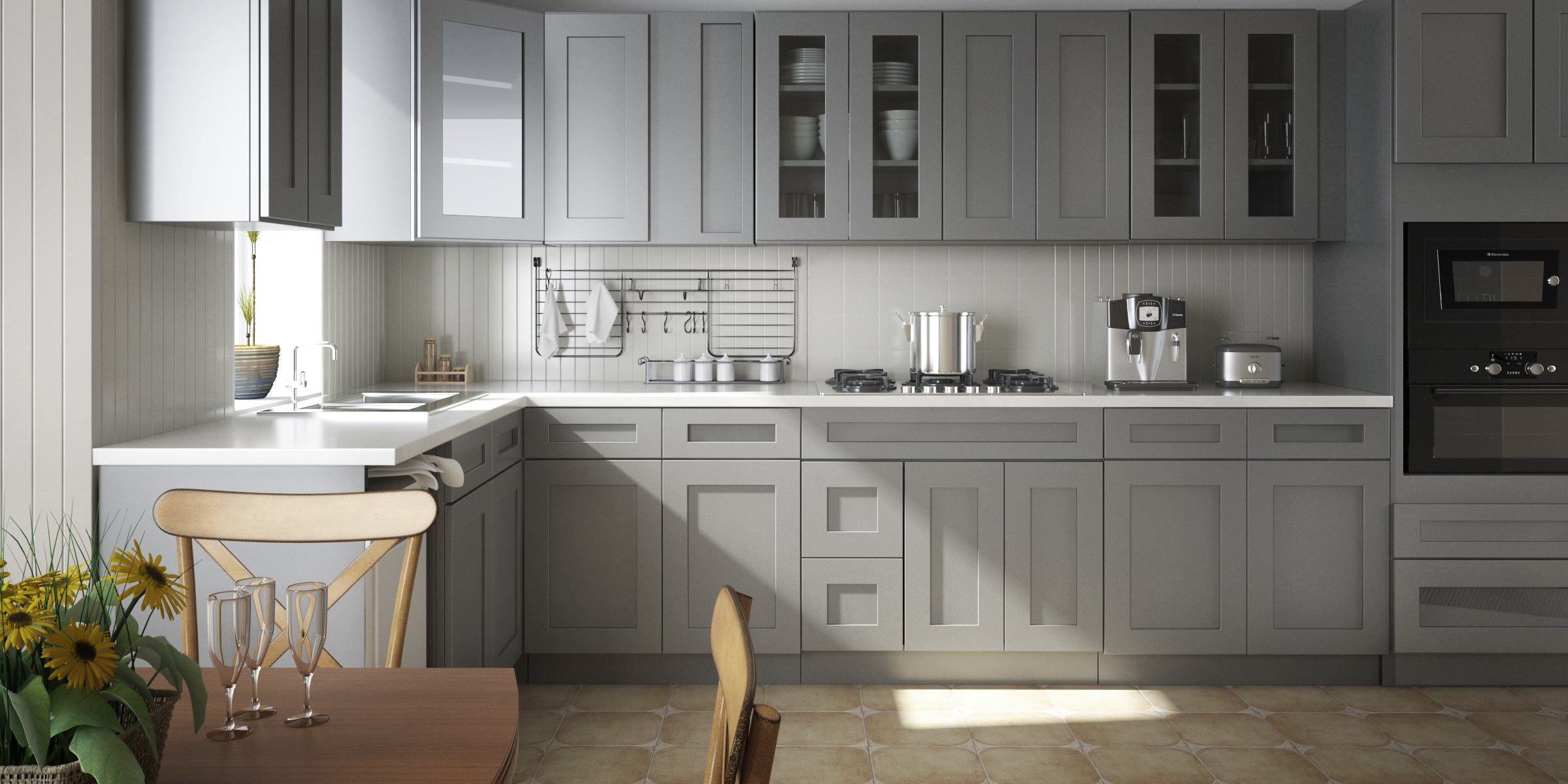
- Light colors: Light-colored cabinets reflect more light and recede visually, making walls appear farther away. Whites, creams, soft grays and pale blues create an airy feeling that dark cabinets can't match in small spaces.
- Glass-front doors: Create visual depth by allowing the eye to travel through the cabinet rather than stopping at a solid door, especially in upper cabinets where they add openness without sacrificing privacy.
-
Minimalist shaker style: Clean lines and simple detailing reduce visual clutter. Shaker cabinets feature flat panels with minimal ornamentation, creating a calm appearance that makes spaces feel larger and more organized.

- Reflective finishes and hardware: Glossier finishes and polished hardware reflect light, brightening spaces and adding subtle sparkle. Stainless steel or chrome pulls contribute to a modern aesthetic while enhancing the sense of space.
6. Plan Optimal Layouts for Small Kitchens
Cabinet strategies work best when built on well-planned layouts. Making kitchens more open to other living areas is increasingly important — 43% of homeowners are pursuing this approach, making layout decisions that support visual flow critical.
Most small kitchens use a few proven configurations that balance efficiency, storage and workflow:
- Galley configurations: Two parallel cabinet runs create efficient work triangles in narrow spaces. This design works exceptionally well in spaces under 8 feet wide. Keep aisles at 42-48 inches minimum to allow cabinet doors to open fully and two people to pass comfortably.
- L-shaped layouts: Position cabinets along two perpendicular walls to open kitchens to adjacent spaces while providing ample storage and counter space, especially for corner cabinet solutions.
- U-shaped designs: Three walls of cabinets create optimal storage density and the most efficient work triangles. These configurations work best in spaces at least 8 feet wide to prevent an enclosed feeling.
- One-wall solutions: Position all cabinets, appliances and workspace along one wall — ideal for studios and efficiency apartments. Strategic use of tall cabinets and pull-out organizers maximizes functionality.
- Professional measurement tips: Follow NKBA planning guidelines for minimum clearances — 42 inches for work aisles, 48 inches for multi-cook aisles. Measure at multiple points to account for out-of-square walls and uneven floors.
7. Elect Quality Materials for Longevity
Material quality protects your reputation long after installation. The cabinets you elect today will either validate your expertise or generate callbacks and complaints. In small spaces where cabinets see heavy daily use, material quality becomes even more critical.
Quality materials ensure cabinets withstand moisture, impact and daily wear without failing while contributing to project profitability:

- RTA vs. preassembled: Ready-to-assemble cabinets ship in flat packs that navigate narrow hallways, tight stairwells and small elevators far more easily than assembled units. This logistical advantage is particularly valuable in apartment buildings, historic homes and urban locations. RTA cabinets typically include assembly instructions and often ship faster than preassembled alternatives.
- Plywood vs. particleboard: All-plywood construction delivers superior durability and moisture resistance. Plywood holds fasteners better, resists sagging under load and won't deteriorate when exposed to humidity. Plywood construction protects your reputation and eliminates callbacks.
- Quality indicators: Look for dovetail or dowel joinery in drawer boxes, full-overlay construction with concealed hinges, and drawer glides rated for 75-100 pounds with soft-close mechanisms. These details separate professional-grade cabinets from economy options that create installation headaches.
Project Types Where These Strategies Shine
These strategies have practical applications across diverse project types you commonly encounter.
Studio Apartments and Small Condos
One-wall and galley layouts dominate these projects, making vertical storage and multifunctional cabinets essential. RTA cabinet configurations for apartments should prioritize visual lightness to prevent kitchens from overwhelming living spaces. Light-colored shaker cabinets with glass-front uppers create an open feeling, while tall pantry cabinets maximize storage without consuming limited floor area. These strategies create premium-feeling kitchens that increase rental income or resale values.
Small Commercial Break Rooms
Commercial break rooms require durability to withstand heavy traffic and frequent use by multiple people. All-plywood construction with commercial-grade hardware ensures cabinets survive daily use without sagging, warping or failing. Smart layouts with ample counter space and pull-out organizers create welcoming break rooms that improve employee satisfaction while protecting your reputation with commercial clients.
Rental Properties and Airbnb Units
Property owners need kitchens that photograph beautifully, attract quality tenants and withstand turnover without constant maintenance. RTA cabinets offer cost-effectiveness that makes updates financially viable while delivering the modern, updated look that commands premium rents. Plywood construction ensures cabinets survive frequent use. The combination delivers strong returns through higher occupancy rates.
Historic Home Galley Kitchens
Historic homes present unique challenges, such as nonstandard dimensions, out-of-square walls and tight access for delivery. Ready-to-assemble cabinets in flat-pack form navigate narrow doorways, steep stairs and tight hallways that would block preassembled units. Modern vertical storage strategies transform cramped period kitchens into functional contemporary spaces while respecting the home's character.
Bathroom Vanity Configurations
Small bathroom vanities benefit from the same strategies. Vertical storage with tall linen cabinets maximizes towel and toiletry storage without consuming floor space. Pull-out organizers prevent items from getting lost in deep vanity cabinets. Specifying the same cabinet line for bathrooms and kitchens creates cohesive, whole-home aesthetics while simplifying ordering and installation.
Professional Tools and Resources
Beyond quality products, the right tools and support streamline your workflow and help you win more projects:
- Use the free 3D design tool for client presentations. Interactive 3D renderings help clients visualize finished spaces and make confident decisions faster than static drawings.
- Download cabinet specifications to verify dimensions, materials and options during planning for accurate ordering and to eliminate installation surprises.
- Access wholesale pricing for trade professionals that protects your margins while delivering better quality to your clients.
Partner With KitchenCrest Cabinets for Your Next Small-Space Project

Small-space projects don't have to mean small profits or compromised quality. When you partner with KitchenCrest Cabinets, you gain access to ready-to-assemble cabinet solutions built for professionals who refuse to settle. Our all-plywood construction ensures durability that protects your reputation. Our modern designs — including our versatile shaker line — deliver the clean, space-enhancing aesthetics your clients demand. With in-stock cabinets and the shortest lead times in the industry, you can keep projects moving and clients happy.
Whether you're outfitting a studio apartment, renovating a historic galley kitchen or designing a commercial break room, KitchenCrest Cabinets offers the wholesale pricing, free design support and best-in-class service that help you win more bids and execute with confidence. Talk to us about your next project and discover how the right cabinet partner makes all the difference. Get a quote today and experience better quality, attractive pricing and the reliable support your business deserves.